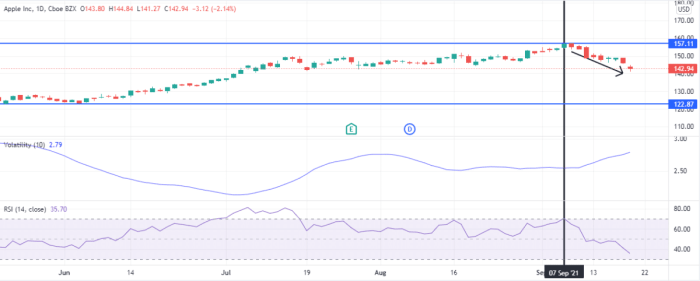
Most volatile stocks for day trading capture the attention of traders and investors alike, promising the thrill of rapid price movements and potential profits. These stocks often experience dramatic fluctuations due to a variety of factors including market news, earnings reports, and economic indicators, making them prime candidates for those looking to capitalize on day trading strategies.
Understanding the dynamics behind these volatile stocks can equip traders with the knowledge needed to navigate the fast-paced market effectively. This discussion will delve into the top five most volatile stocks currently trending, the reasons for their volatility, and key trading techniques to maximize returns while managing risks.
Most Volatile Stocks for Day Trading

In the fast-paced world of day trading, volatility can be both a trader’s best friend and worst enemy. Traders often seek out stocks that exhibit high volatility, as these stocks present opportunities for significant price movements within short time frames. Below, we delve into some of the most volatile stocks currently trending in the market, the factors driving their volatility, and effective trading strategies tailored for these dynamic assets.The following list highlights the top five most volatile stocks that are currently attracting attention from day traders.
These stocks have shown significant price fluctuations, which can lead to quick gains for those who strategize effectively.
Top Five Most Volatile Stocks
These stocks have been identified for their consistent price swings, making them prime candidates for day trading:
- Tesla Inc. (TSLA)
-Known for its rapid price movements, Tesla’s stock is influenced by market sentiment, production updates, and broader trends in the electric vehicle industry. - Amazon.com Inc. (AMZN)
-As a major player in e-commerce and cloud computing, Amazon often experiences volatility due to earnings reports and shifts in consumer behavior. - GameStop Corp. (GME)
-The stock has gained notoriety for its extreme price swings driven by retail trading trends and social media influence, especially following the events of early 2021. - Palantir Technologies Inc. (PLTR)
-This tech company faces volatility due to its controversial business model and ongoing debates about valuation versus growth potential. - NIO Inc. (NIO)
-As a Chinese electric vehicle manufacturer, NIO’s stock is sensitive to regulatory changes, market competition, and technological advancements.
Factors Contributing to Volatility
Several factors contribute to the volatility observed in these stocks. Understanding these elements is crucial for traders aiming to make informed decisions.
- Earnings Reports: Companies often experience heightened volatility around the time of their quarterly earnings announcements. Surprises, whether positive or negative, can lead to drastic price changes.
- Market Sentiment: Stocks like Tesla and GameStop are particularly susceptible to shifts in investor sentiment, which can be influenced by social media, news articles, and general market trends.
- Sector Performance: The performance of specific sectors, such as technology or electric vehicles, can greatly impact individual stocks within that sector, leading to increased price fluctuations.
- Economic Indicators: Economic reports, such as unemployment rates and GDP growth, can affect overall market performance, leading to volatility in stocks across various sectors.
- Regulatory Changes: Companies operating in highly regulated industries, particularly those in tech and automotive, may face increased volatility due to changes in laws or regulations affecting their operations.
Strategies for Trading Volatile Stocks
Successfully trading volatile stocks requires a combination of skill, strategy, and risk management. Here are some effective strategies that traders can employ:
- Set Clear Entry and Exit Points: Before entering a trade, establish specific price points for both entry and exit to manage risk and maximize potential profits.
- Use Stop-Loss Orders: Implementing stop-loss orders can help limit potential losses in case the trade does not go as planned, protecting your capital.
- Focus on Technical Analysis: Utilize charts and technical indicators to identify trends, support, and resistance levels, assisting in making informed trading decisions.
- Keep an Eye on News: Staying updated with the latest news and developments related to the stocks being traded can provide insights into potential price movements.
- Practice Risk Management: Only allocate a small percentage of your trading capital to any single trade to mitigate risks associated with volatility.
“Understanding the factors driving volatility and employing effective trading strategies can significantly enhance a trader’s chances of success in the fast-paced environment of day trading.”
Day Trading Techniques
Day trading is an engaging and potentially lucrative venture that requires a solid grasp of various techniques and strategies. Successful day traders utilize specific methods to capitalize on short-term price movements in volatile stocks. Understanding these techniques, along with implementing effective risk management strategies, is crucial to navigating the fast-paced world of day trading.Effective day trading relies heavily on technical analysis, which involves evaluating price movements and trading volumes using technical indicators.
These indicators provide insights that help traders make informed decisions when entering and exiting trades. It’s essential to not only select the right indicators but also understand their significance in the context of market conditions, especially for volatile stocks.
Risk Management Strategies
Risk management is paramount in day trading, as it helps protect capital and minimize losses. Implementing appropriate risk management techniques allows traders to maintain discipline and avoid emotional decision-making. Here are essential risk management strategies to consider:
- Set Stop-Loss Orders: A stop-loss order is a pre-defined price level at which a trader will exit a losing position. This protects traders from significant losses, especially in volatile markets where prices can swing dramatically.
- Position Sizing: Determine the size of each position based on your total capital and risk tolerance. A common approach is to risk only a small percentage of your capital (often 1-2%) on a single trade.
- Diversification: Avoid putting all your capital into one stock or sector. Diversifying your trades can help mitigate risk, as different stocks may respond differently to market events.
- Maintain a Risk-Reward Ratio: Aim for a favorable risk-reward ratio, typically a minimum of 1:2. This means for every dollar risked, the potential gain should be at least two dollars, ensuring profitability over time.
Technical Indicators for Volatile Stocks
Technical indicators play a crucial role in day trading, especially when dealing with volatile stocks. These indicators help traders identify trends, momentum, and potential reversal points. Below are some commonly used technical indicators that can assist in day trading:
- Moving Averages: Both the Simple Moving Average (SMA) and Exponential Moving Average (EMA) are effective in smoothing price data to identify trends. Traders often use crossovers between short-term and long-term moving averages as buy or sell signals.
- Relative Strength Index (RSI): The RSI is a momentum oscillator that measures the speed and change of price movements. An RSI above 70 indicates overbought conditions, while below 30 signals oversold conditions, helping traders identify potential reversal points.
- Bollinger Bands: This tool consists of a middle band (the moving average) and two outer bands that represent volatility. Prices nearing the upper band may suggest an overbought situation, while touching the lower band could imply oversold conditions.
- MACD (Moving Average Convergence Divergence): The MACD is a trend-following momentum indicator that shows the relationship between two moving averages of a stock’s price. Traders look for MACD crossovers along with divergence from price to identify potential buy or sell signals.
Importance of Timing and Execution
In day trading, timing and execution are essential, especially when trading volatile stocks. Executing trades at the right moment can significantly impact profitability. Here are key factors to consider regarding timing:
- Market Hours: The first and last hours of trading often exhibit the highest volatility and volume, providing more opportunities for day traders. It’s crucial to align your trading strategy with these peak times.
- News and Events: Major news releases or earnings reports can cause significant price movements. Staying informed about economic indicators and company-specific announcements can help traders anticipate volatility.
- Order Types: Using the right order types, such as market or limit orders, can affect the execution of trades. Market orders guarantee execution but may have slippage, while limit orders can control entry price but may not execute if the market moves quickly.
- Emotional Discipline: The ability to stick to your trading plan and avoid impulsive decisions is crucial. Emotional discipline enables traders to execute their strategies effectively, even in a volatile environment.
“In day trading, timing is everything. A well-timed entry and exit can make the difference between profit and loss.”
Investing Strategies for Beginners
Investing in volatile stocks can be an exciting yet challenging arena, especially for beginners looking to engage in day trading. Developing a robust strategy is essential to navigate the nuances of the market, manage risks, and potentially maximize gains. This section Artikels a step-by-step approach tailored for novice traders, delving into the relationship between futures, commodities, and mutual funds with day trading practices.
Step-by-Step Approach for Beginners
A structured approach can help beginners ease into the fast-paced world of day trading. Here’s a practical guide to get started:
- Educate Yourself: Understanding market fundamentals, trading terminologies, and the specific nature of volatile stocks is crucial.
- Choose a Trading Platform: Select a brokerage that suits your needs, focusing on fees, usability, and tools offered for day trading.
- Develop a Trading Plan: Set clear goals, risk tolerance, and strategies for entry and exit points to guide your trading decisions.
- Practice with a Demo Account: Use virtual trading platforms to practice trading without financial risk, helping build confidence and skills.
- Start Small: Begin with a small amount of capital to minimize risk while testing your strategies in real market conditions.
- Analyze Your Trades: After each trading session, review your trades to identify successful strategies and areas for improvement.
The Role of Futures and Commodities
Futures and commodities can enhance a day trader’s strategy by providing additional opportunities for profit and diversification. These financial instruments allow traders to speculate on price movements of underlying assets.
“Futures contracts obligate the buyer to purchase, and the seller to sell, an asset at a predetermined price at a specified time in the future.”
Incorporating futures and commodities into day trading can offer advantages such as:
- Diversification: Traders can spread risk across various asset classes, reducing exposure to any single market.
- Leverage: Futures contracts often require a smaller initial investment compared to the underlying asset, enabling larger position sizes.
- Market Access: Futures markets are available nearly 24/7, providing traders with more opportunities to capitalize on market movements.
Mutual Funds in Relation to Day Trading
While day trading typically focuses on individual stocks, mutual funds can play a complementary role in a broader investment strategy. Mutual funds comprise a diversified portfolio of stocks, which can provide a buffer against the inherent risks of day trading.
“Mutual funds allow investors to pool their money together to invest in a diversified portfolio managed by professionals.”
Understanding how mutual funds relate to day trading practices involves recognizing their functions in risk management:
- Risk Mitigation: By investing in mutual funds, traders can reduce the volatility of their portfolios, balancing their high-risk day trading activities.
- Long-Term Growth: While day trading aims for quick profits, mutual funds can provide a consistent growth pathway for long-term investors.
- Professional Management: Mutual funds are managed by financial professionals, allowing traders to benefit from their expertise without active involvement.
Final Review
In summary, engaging with the most volatile stocks for day trading offers an exciting opportunity for profit but comes with inherent risks. By staying informed about market movements, employing effective trading strategies, and maintaining strict risk management practices, traders can enhance their chances of success in this dynamic arena. Remember, preparation and knowledge are essential tools for any day trader looking to thrive.
Quick FAQs
What are volatile stocks?
Volatile stocks are shares that experience significant price fluctuations over short periods, influenced by various market factors.
How can I identify volatile stocks?
You can identify volatile stocks by analyzing their daily price movements, trading volume, and news events that may affect their prices.
What is the best strategy for trading volatile stocks?
Effective strategies include using stop-loss orders, technical analysis, and maintaining a disciplined trading approach to minimize risks.
Are volatile stocks suitable for beginners?
While volatile stocks can offer high reward potential, they also come with high risks, so beginners should approach them with caution and thorough research.
How does market news affect stock volatility?
Market news, such as earnings announcements or economic reports, can lead to rapid price changes in stocks, contributing to their volatility.


